

Late 19th Century French Country Pine Door with Antique Glass
A tall provincial door, softened by decades of paint and light, carrying the quiet poetry of French rural architecture.

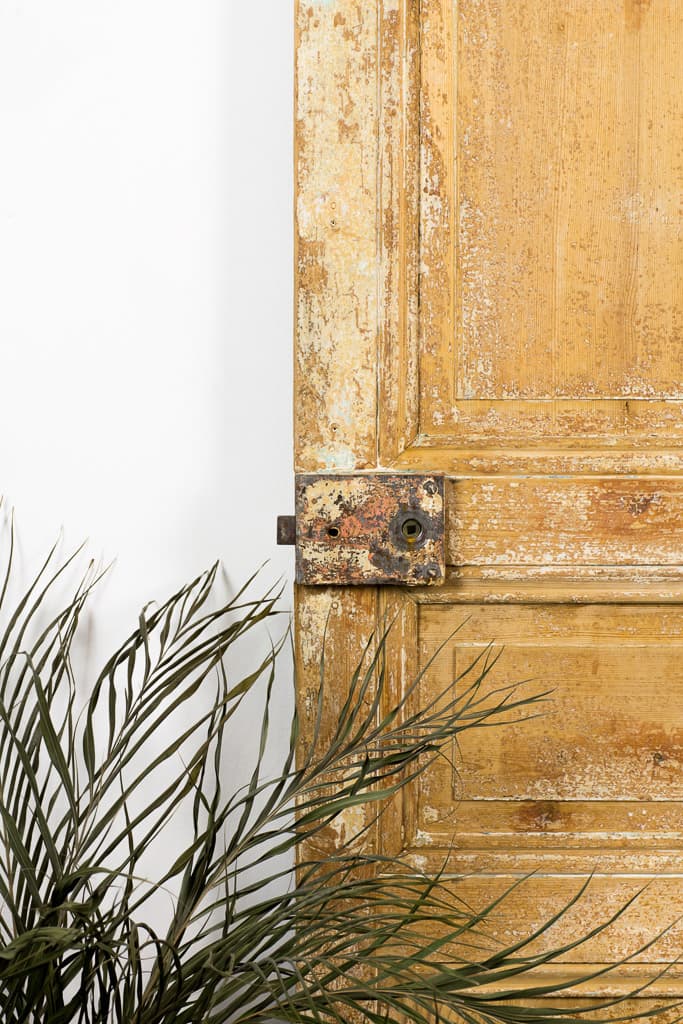
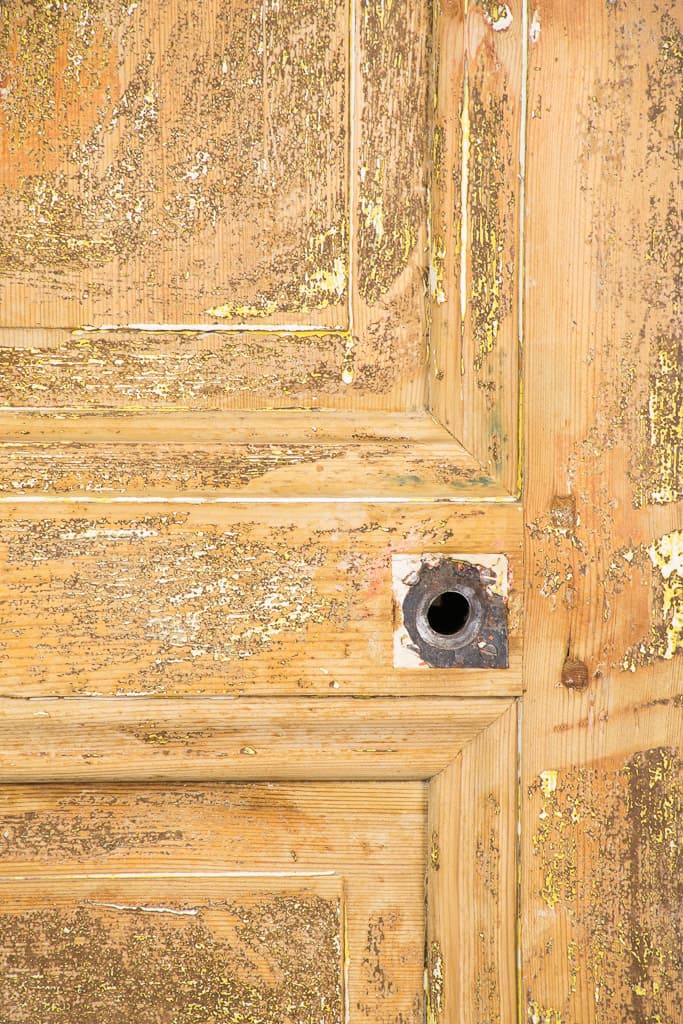
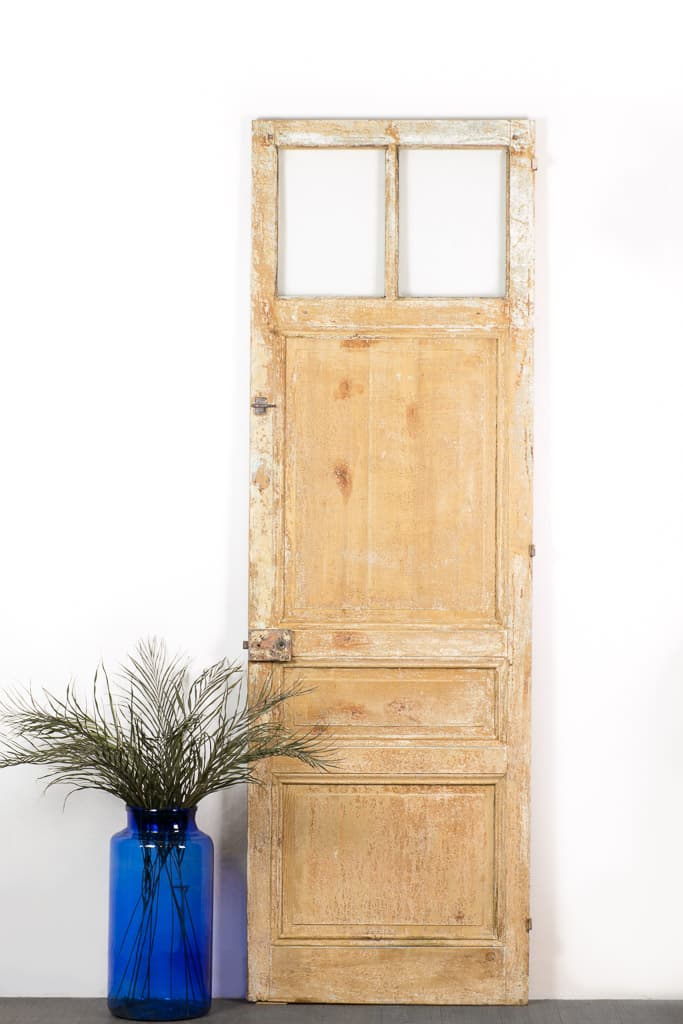
Crafted in pine and built in the traditional stile-and-rail manner, this French country door is defined by its straightforward geometry: a glazed upper portion above a sequence of raised-and-fielded panels. The composition is practical and balanced, typical of domestic doors found in provincial houses where utility and proportion were closely allied. The surface bears multiple layers of historic paint, now rubbed back to reveal a nuanced palette of warm ochre and pale, chalky tones. Along the mouldings and edges, the softened profiles speak to long use and the slow work of time—an “as found” character that collectors and designers value for its sincerity. Such doors belong to the vocabulary of 19th-century French rural building: modest yet carefully made, with simple paneling and glazing intended to borrow daylight between rooms or along corridors. Without claiming specific provenance, the piece reads convincingly within that broader tradition. Preserved with its antique glass, it remains both an architectural fragment and a sculptural object. In contemporary settings, it can be leaned as a dramatic wall element, used as a sliding or hinged door by a qualified installer, or staged as a backdrop to highlight natural materials—linen, stone, and untreated woods—where its patina becomes a gentle anchor rather than a statement.


Late 19th Century French Country Pine Door with Antique Glass
Crafted in pine and built in the traditional stile-and-rail manner, this French country door is defined by its straightforward geometry: a glazed upper portion above a sequence of raised-and-fielded panels. The composition is practical and balanced, typical of domestic doors found in provincial houses where utility and proportion were closely allied. The surface bears multiple layers of historic paint, now rubbed back to reveal a nuanced palette of warm ochre and pale, chalky tones. Along the mouldings and edges, the softened profiles speak to long use and the slow work of time—an “as found” character that collectors and designers value for its sincerity. Such doors belong to the vocabulary of 19th-century French rural building: modest yet carefully made, with simple paneling and glazing intended to borrow daylight between rooms or along corridors. Without claiming specific provenance, the piece reads convincingly within that broader tradition. Preserved with its antique glass, it remains both an architectural fragment and a sculptural object. In contemporary settings, it can be leaned as a dramatic wall element, used as a sliding or hinged door by a qualified installer, or staged as a backdrop to highlight natural materials—linen, stone, and untreated woods—where its patina becomes a gentle anchor rather than a statement.