

18th Century Louis XVI Style Painted Oak Commode with Faux Marble Top
An elegant neoclassical form, enriched by subtle patina and measured detail.

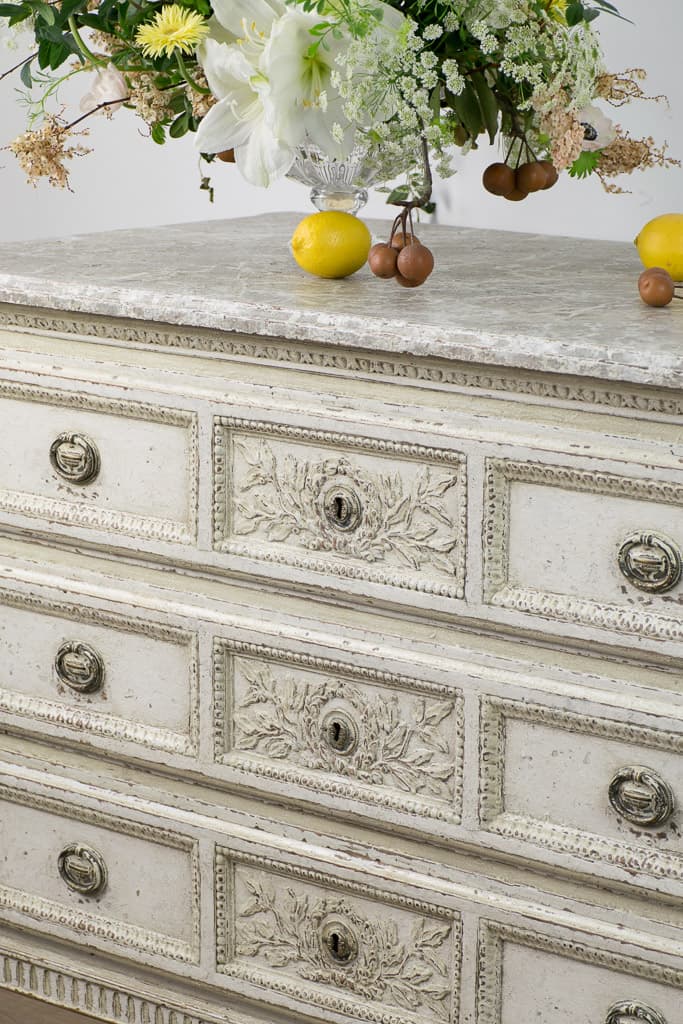
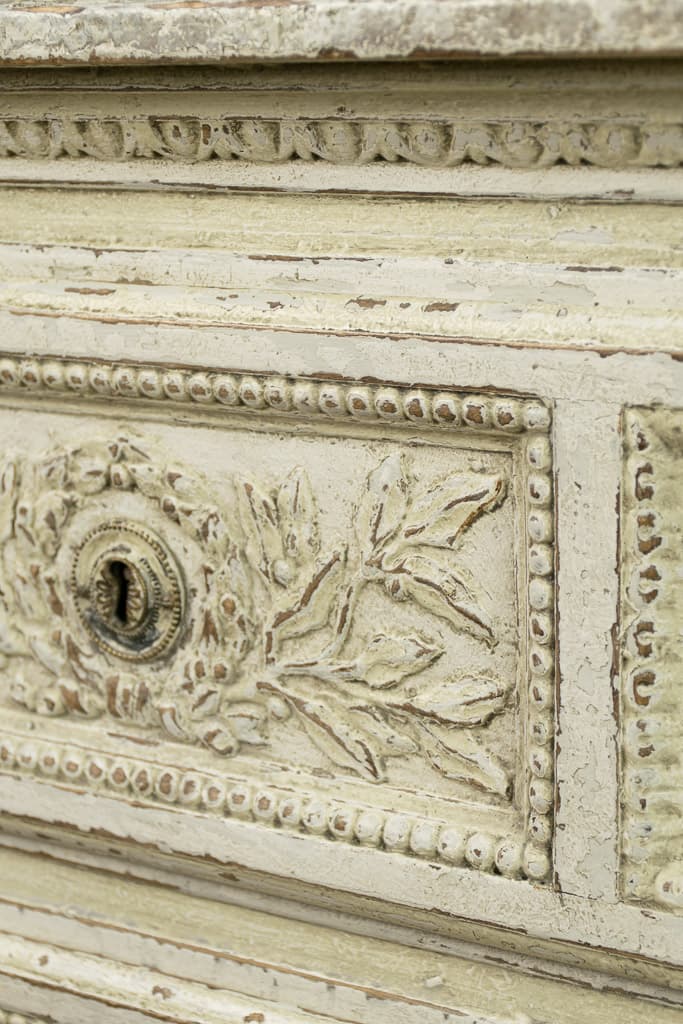
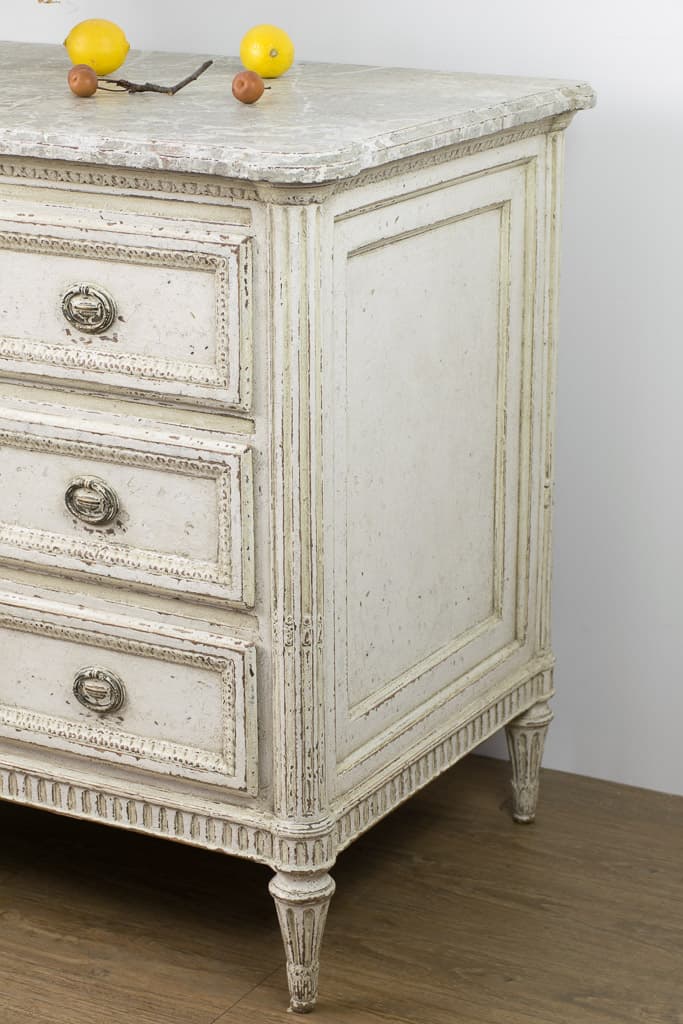
This commode reflects the restrained elegance of the Louis XVI period, expressed through balanced proportions and a symmetrical three-drawer façade. Fluted uprights and tapered legs lend the piece a light architectural presence while maintaining visual stability. Its decorative language draws on neoclassical ideals, with carved floral motifs and fine beaded moldings articulating each drawer front. The centered hardware reinforces the symmetry, while the clarity of line avoids excess ornamentation. Crafted in oak, the structure is enhanced by a painted surface that reveals a softly worn patina, bearing quiet traces of time and use. The faux marble top introduces a subtle contrast, evoking stone while preserving a lighter visual character. In a contemporary interior, this piece integrates into calm, layered spaces—whether in a bedroom, living area, or entryway—where its muted palette and architectural lines complement both modern and classical settings.


18th Century Louis XVI Style Painted Oak Commode with Faux Marble Top
This commode reflects the restrained elegance of the Louis XVI period, expressed through balanced proportions and a symmetrical three-drawer façade. Fluted uprights and tapered legs lend the piece a light architectural presence while maintaining visual stability. Its decorative language draws on neoclassical ideals, with carved floral motifs and fine beaded moldings articulating each drawer front. The centered hardware reinforces the symmetry, while the clarity of line avoids excess ornamentation. Crafted in oak, the structure is enhanced by a painted surface that reveals a softly worn patina, bearing quiet traces of time and use. The faux marble top introduces a subtle contrast, evoking stone while preserving a lighter visual character. In a contemporary interior, this piece integrates into calm, layered spaces—whether in a bedroom, living area, or entryway—where its muted palette and architectural lines complement both modern and classical settings.